Creative Kitchen Reset: Easy Styling That Changes the Feel
This website contains affiliate links. I may earn a commission at no additional cost to you if you make a purchase through these links.
If you want to follow this reset step by step, there’s a printable checklist waiting at the end of the post.
Looking for a full reset?
→ Start with the Spring Reset
A kitchen changes mood faster than most people realize.
It is where routines begin, where coffee sits too long, where mail gets dropped, where conversations happen half-finished, and where the room quietly starts to collect visual noise without anyone noticing.
That is why even a small reset can make the whole space feel different.
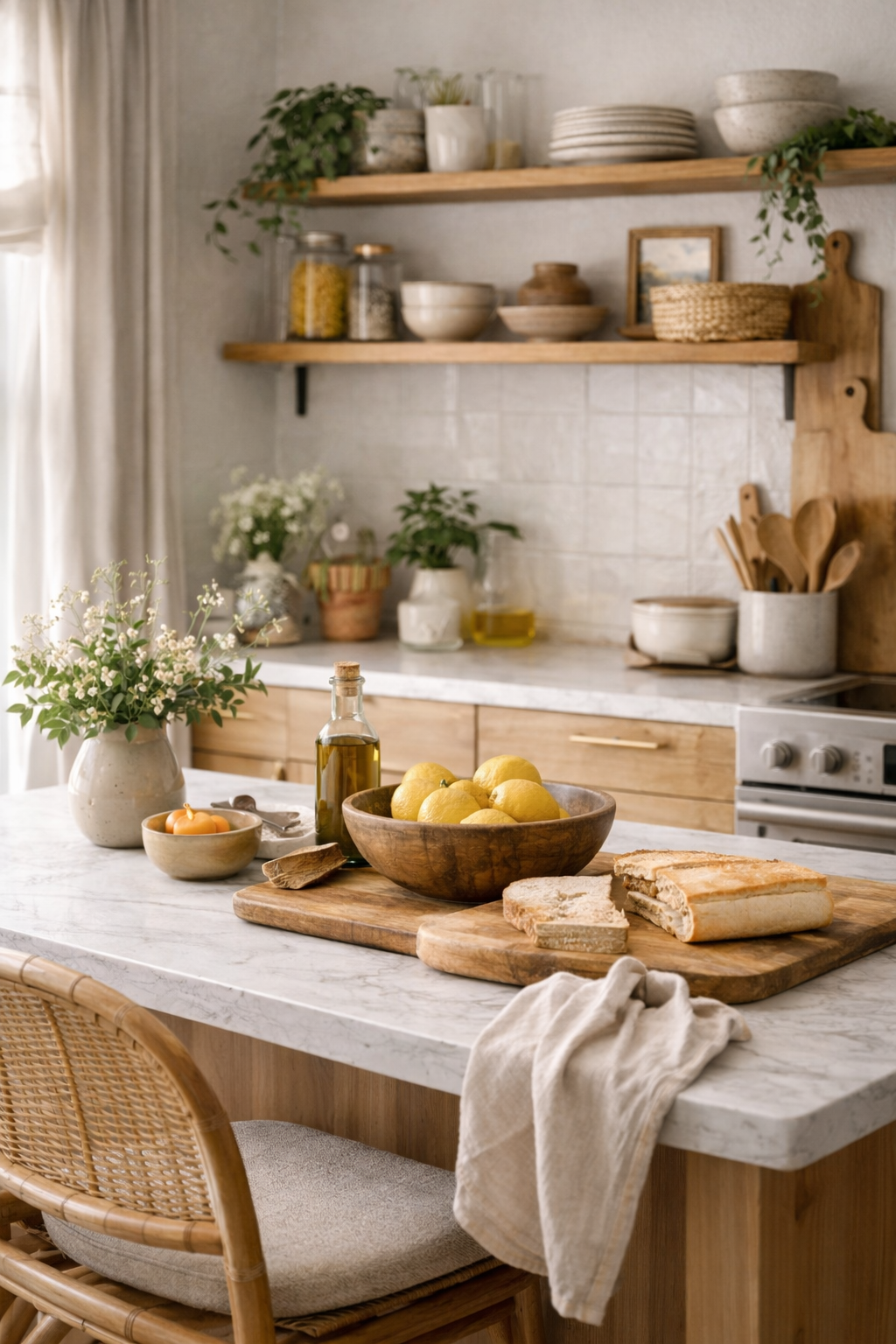
Creative mood is not about making a kitchen look busy or decorative. It is about giving the room a little more life. A little more personality. A little more movement.
Sometimes that means shifting what is already there.
A cutting board leaned differently.
A ceramic bowl moved into better light.
A towel with texture instead of one that disappears.
Small changes often create the strongest feeling because they change how the room is read without forcing it.
When a kitchen feels creative, it usually feels more inviting too.
What Makes a Kitchen Feel Creative
Creative spaces are not perfect.
They feel layered, slightly personal, and a little unexpected.
A creative kitchen usually has:
- texture that breaks up hard surfaces
- objects left visible with intention
- warmth mixed with contrast
- pieces that feel collected instead of overly matched
The goal is not decoration for decoration’s sake.
The goal is making the room feel like it has character without losing function.
A kitchen should still work easily.
It just should not feel flat while doing it.
Start with What You See First
The countertop controls the mood immediately.
If the surface feels crowded, the whole room feels heavier.
Clear everything first.
Then only place back what deserves to stay visible.
Keep:
- one daily-use item
- one natural element
- one object that adds shape
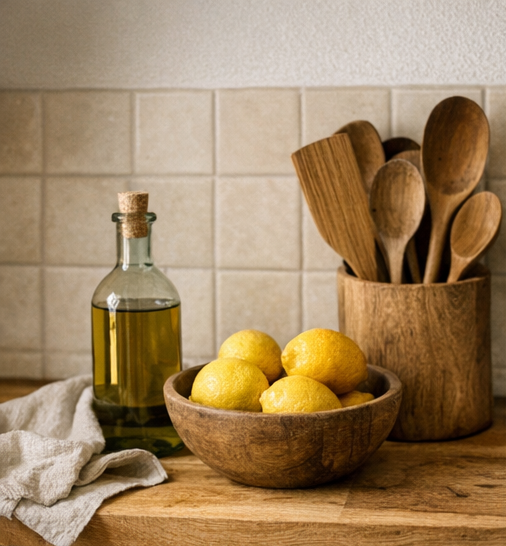
A simple example:
- olive oil bottle
- small bowl of fruit
- wooden utensil holder
That already feels more intentional than six unrelated things spread across the counter.
Creative styling works best when there is breathing room.
Negative space matters more than people expect.
Use Everyday Objects as Part of the Styling
The easiest way to create a creative kitchen is to stop hiding everything useful.
Some of the best visual details are ordinary things left out well.
Try:
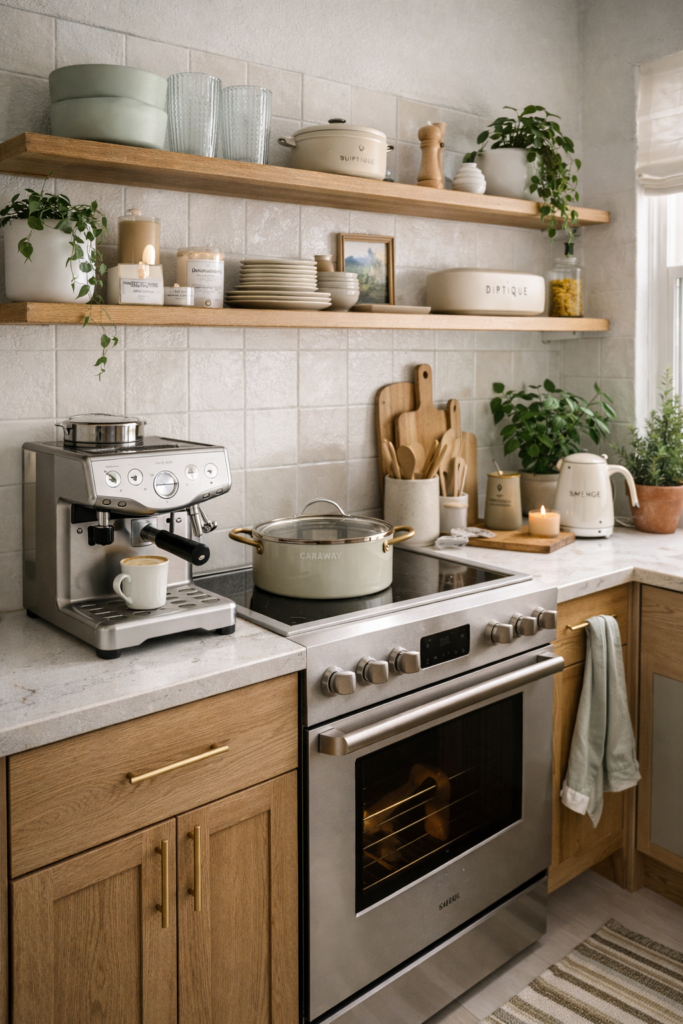
- wooden spoons in a ceramic jar
- stacked plates near the stove
- a favorite mug beside the coffee area
- a cutting board layered against the backsplash
Useful objects often feel warmer than decorative ones because they belong naturally.
A kitchen should never feel staged to the point where it looks afraid of being used.
That always ruins the mood. Humans do this constantly. They style rooms like nobody is allowed to touch them, then wonder why the room feels emotionally unavailable.
Bring in Color Without Forcing It
A creative kitchen does not need a full color change.
Usually one controlled accent is enough.
Good color choices for this mood:
- soft sage
- muted terracotta
- dusty blue
- warm cream with deeper natural wood tones
You can introduce color through:
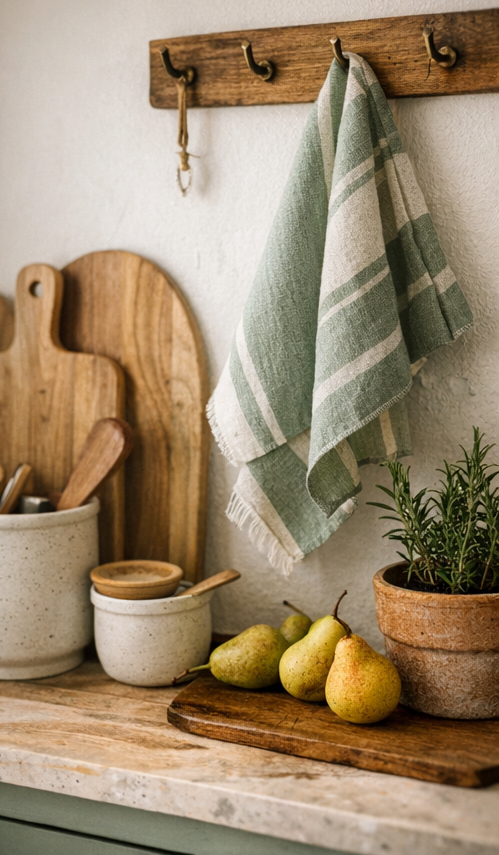
- dish towels
- ceramics
- fruit bowls
- a small piece of art
- glassware
Even one visible color anchor helps the room feel more alive.
Especially in kitchens where everything else is neutral.
Texture Changes Everything
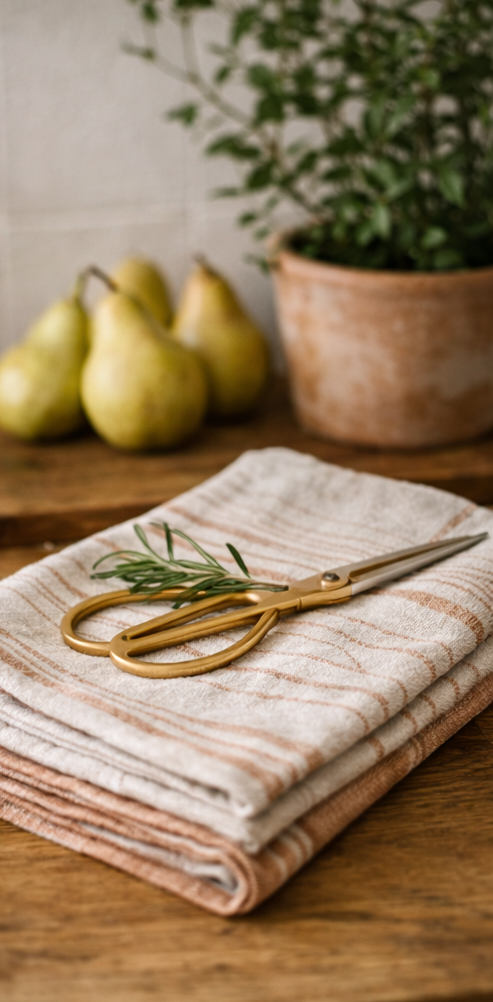
Kitchens are full of hard materials.
Cabinets. Stone. Metal. Glass.
That is why texture matters so much here.
Add softness through contrast:
- linen towel
- woven tray
- clay pot
- wood board
- matte ceramic
A simple rule that works almost every time:
soft + hard + natural
For example:
- linen towel
- ceramic pitcher
- wooden spoon
That combination feels balanced without trying too hard.
Open Shelves Should Feel Edited, Not Full
If shelves exist, they should tell a story, not look like a storage problem.
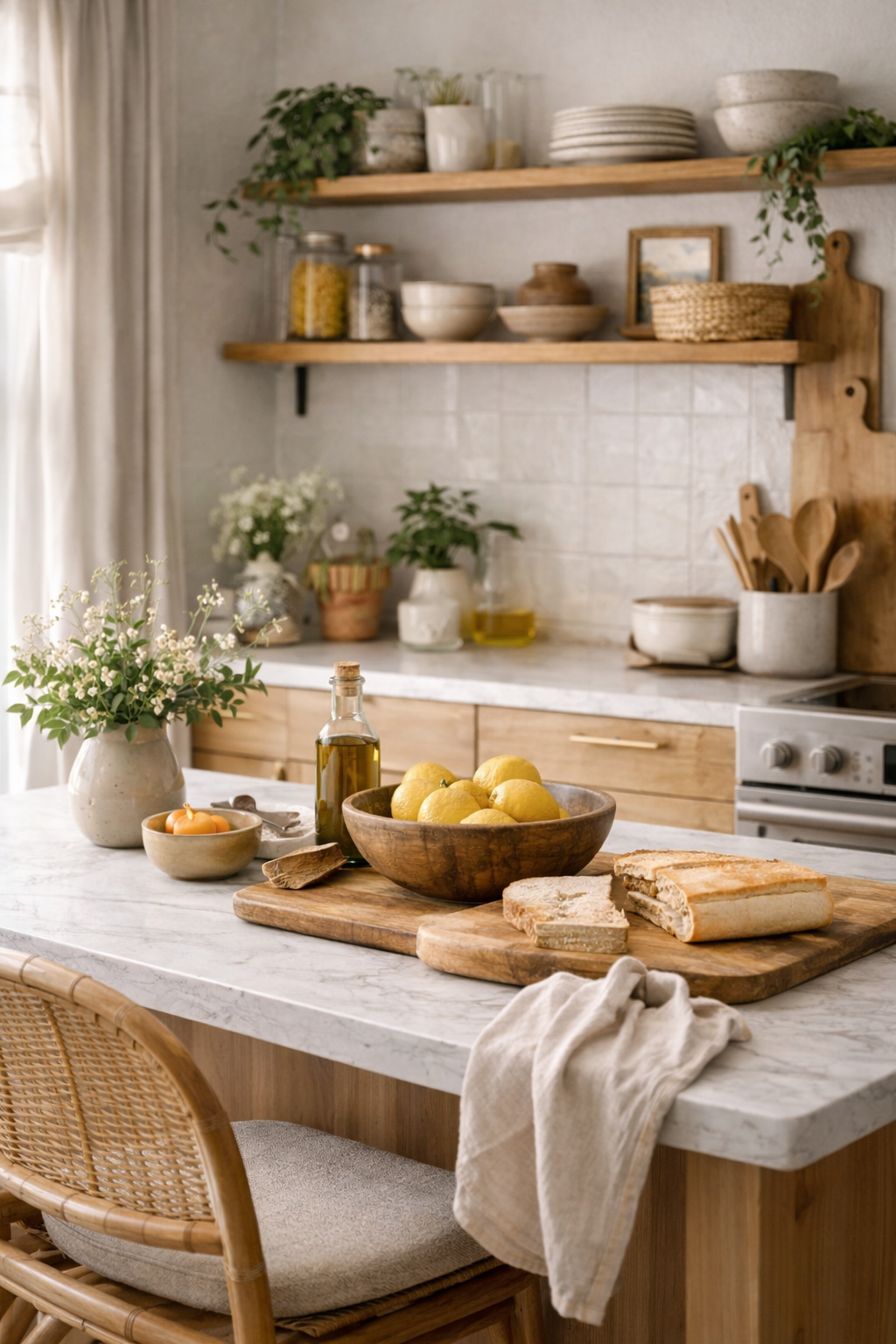
A simple balance works well:
- mostly practical pieces
- one natural material
- one decorative object
Try:
- stacked bowls
- glass jars
- folded linen
- one small framed piece
- a trailing plant
Leave space between objects.
Creative mood needs pause.
Too much shelf styling turns into visual noise fast.
Lighting Is Usually the Missing Piece
A kitchen can be beautifully styled and still feel wrong under harsh light.
Overhead lighting flattens everything.
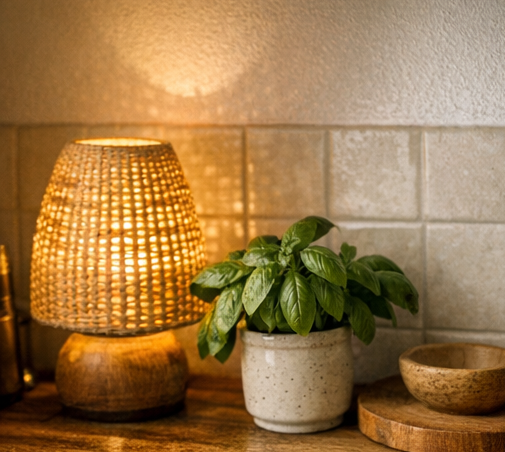
Whenever possible:
- turn on a small lamp
- use under-cabinet light
- let window light stay softer in the morning or evening
Warm light changes:
- wood looks richer
- ceramics feel softer
- neutral colors stop looking cold
A small lamp in a kitchen often changes more than buying something new.
Ridiculous, but true!
Add Softness Where Kitchens Usually Feel Hard
Because kitchens are practical spaces, softness matters more here than people expect.
Use fabric intentionally:
- linen towel
- washable rug
- simple curtain
- woven runner
One textile with visible texture immediately softens the room.
Even hanging a towel properly instead of tossing it over the handle changes how finished the room feels.
Tiny details carry an absurd amount of visual weight.
Use One Seasonal Detail, Not Ten
A creative kitchen stays fresh when one small seasonal shift appears.
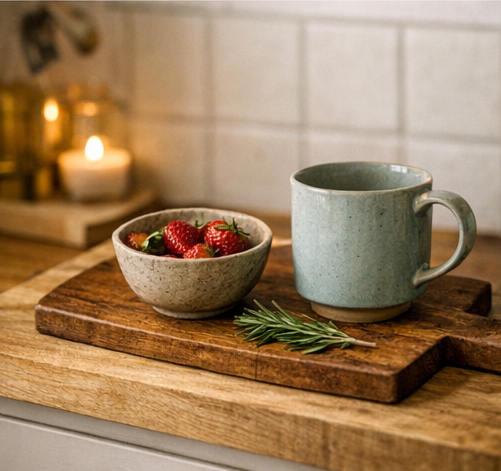
Try:
- citrus in spring
- herbs in summer
- pears in autumn
- evergreen stems in winter
Nothing elaborate.
A bowl, a stem, a color change.
That is enough.
Seasonal mood works best when it looks natural, not announced like the room is auditioning for a holiday commercial.
Bring in Something Living
Nature almost always improves a kitchen.
Best options:
- basil near the window
- rosemary in a clay pot
- a small trailing plant on a shelf
Natural materials help too:
- wood
- rattan
- clay
- stone
These pieces add quiet depth because they age well and never feel too polished.
A kitchen usually feels most creative when at least one thing looks alive.
The Real Reset
A creative kitchen reset is not about adding more.
It is usually about editing better.
A better angle.
A better grouping.
A better use of light.
When a room feels intentional, even ordinary objects begin to look different.
And that is usually the point where the kitchen starts feeling like part of your mood instead of just the place where everything gets dropped.
Download the free Creative Kitchen Reset Checklist to follow while styling your space.