The 30-Minute Relax Reset: How to Change the Mood of Your Living Room (Without Buying Anything)
Have you ever walked into your living room and thought,
“It just feels… off”?
Nothing’s broken.
Nothing’s outdated.
But the room feels heavy. Busy. Slightly overstimulating.
Most people think they need to buy something.
You don’t.
You need to shift the mood.
This 30-Minute Relax Reset is about using what you already own to move your space from tense to calm, scattered to intentional.
Design by mood, not by trend.
Why a Living Room Reset Matters
Your living room affects your nervous system more than you realize.
It’s where you decompress.
Where conversations happen.
Where your brain either settles… or stays alert.
Research consistently shows that clutter and harsh lighting increase mental load, while softer, organized environments reduce stress.
This reset isn’t about decorating.
It’s about regulating.
If you want to follow this reset step by step, there’s a printable checklist waiting at the end of the post.
The 30-Minute Relax Reset
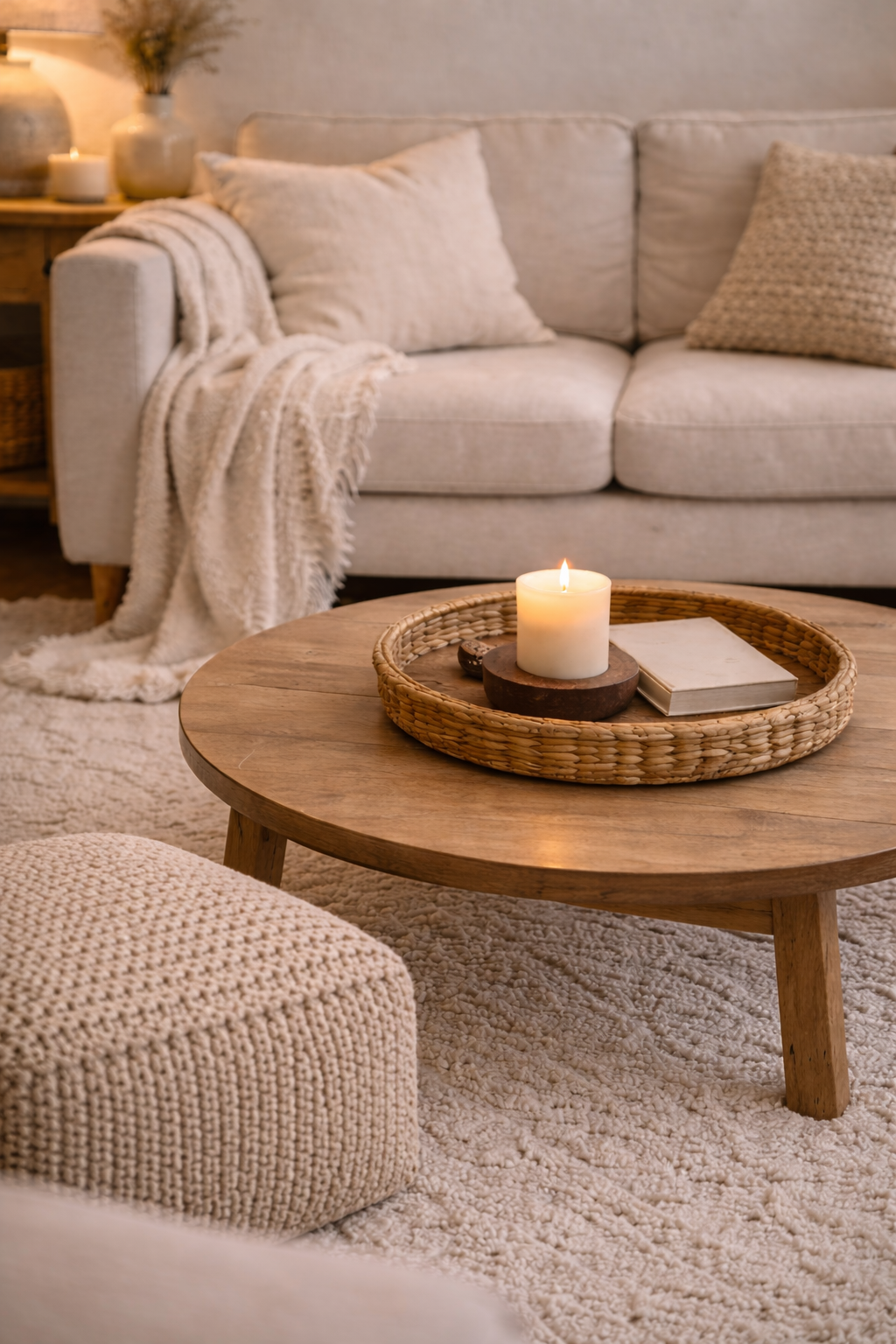
Minute 0–5: Clear the Visual Noise
Start with surfaces.
Coffee table. Side tables. Media console.
Remove everything.
Now add back only what supports a relaxed mood:
- One meaningful object
- A book you’re actually reading
- A candle or small plant
Store the in-between items:
- Remotes
- Cords
Use a drawer, basket, or box you already own.
Clear surfaces signal calm to your brain.
Less input. Less tension.
Relaxed spaces are edited spaces.
Minute 5–10: Shift the Lighting
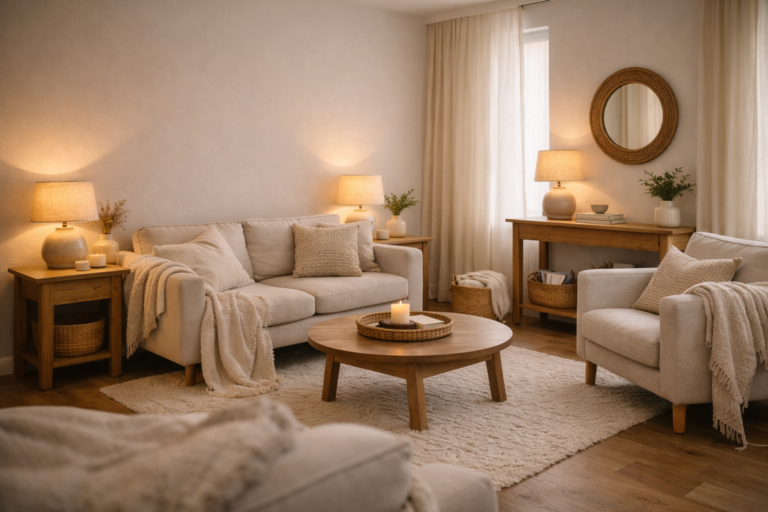
Lighting changes mood faster than anything else.
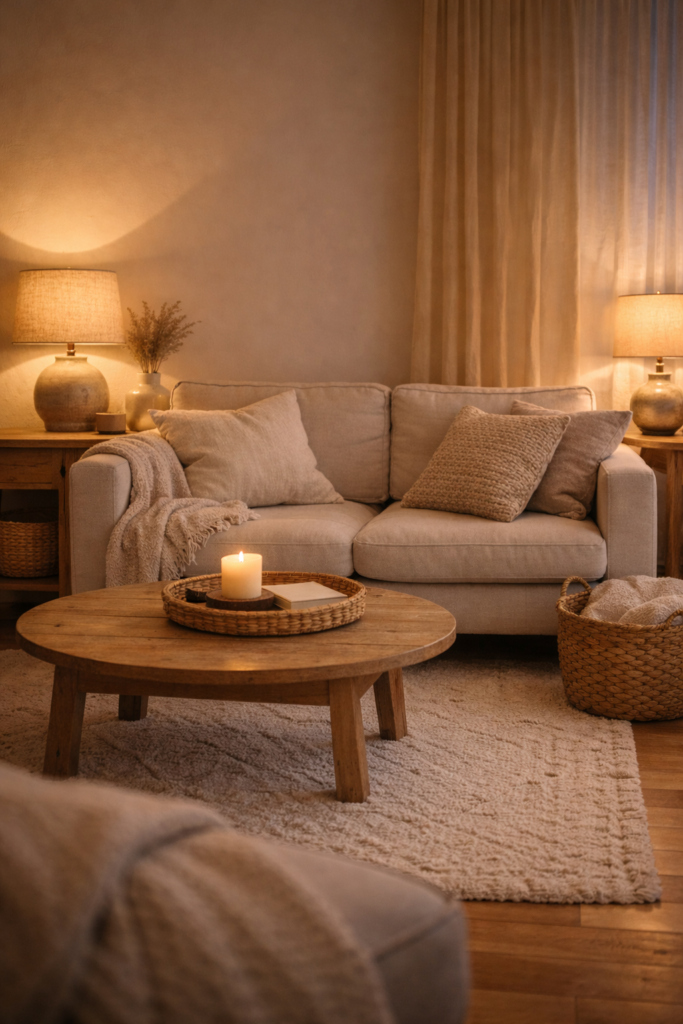
- Turn off overhead lights
- Turn on lamps
- Open curtains halfway instead of fully
- Close them slightly if the light feels harsh
If overhead lighting is your only option, turn off half the bulbs if possible.
Soft light = softened mood.
Your brain reads brightness as alertness.
Dimmer light signals rest.
Layered, warm lighting immediately reduces visual tension.
Minute 10–15: Rework the Layout (Slightly)
You don’t need to move the couch across the room.
Just interrupt the pattern.
- Angle a chair slightly inward
- Pull furniture a few inches away from the walls
- Center your coffee table properly
- Create a tighter conversation area instead of facing everything toward the TV
Even small shifts change visual balance.
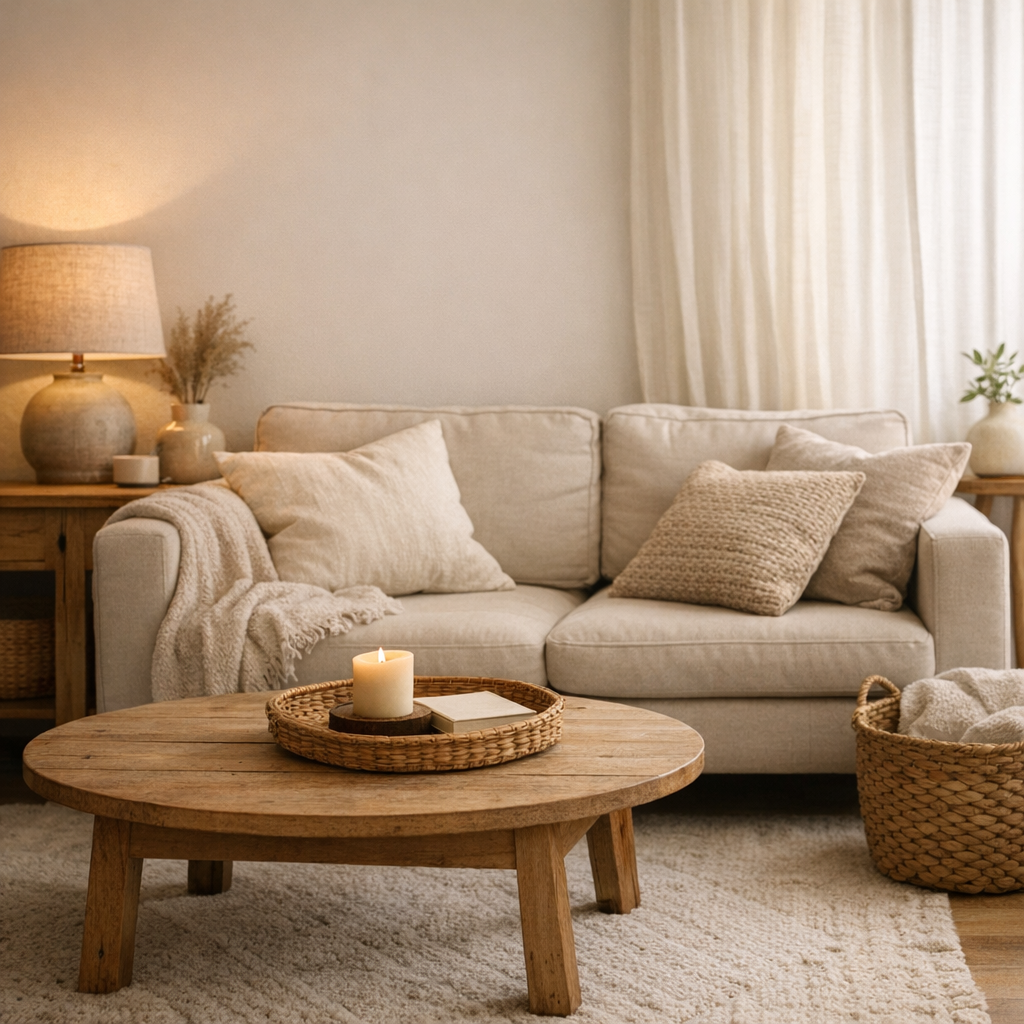
Relaxed rooms feel intentional, not scattered.
Harmony feels calm.
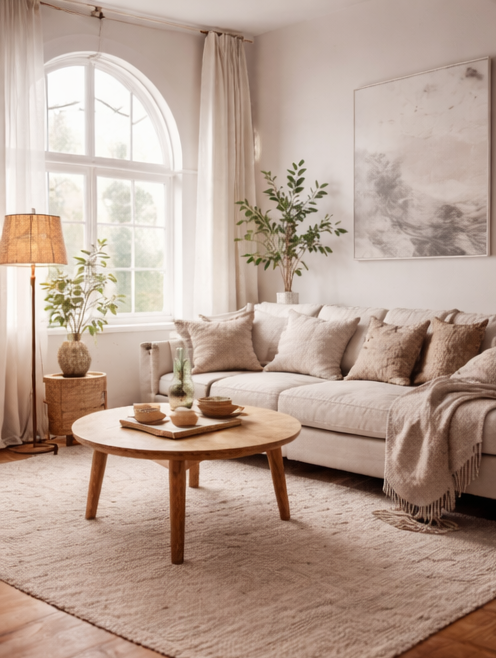
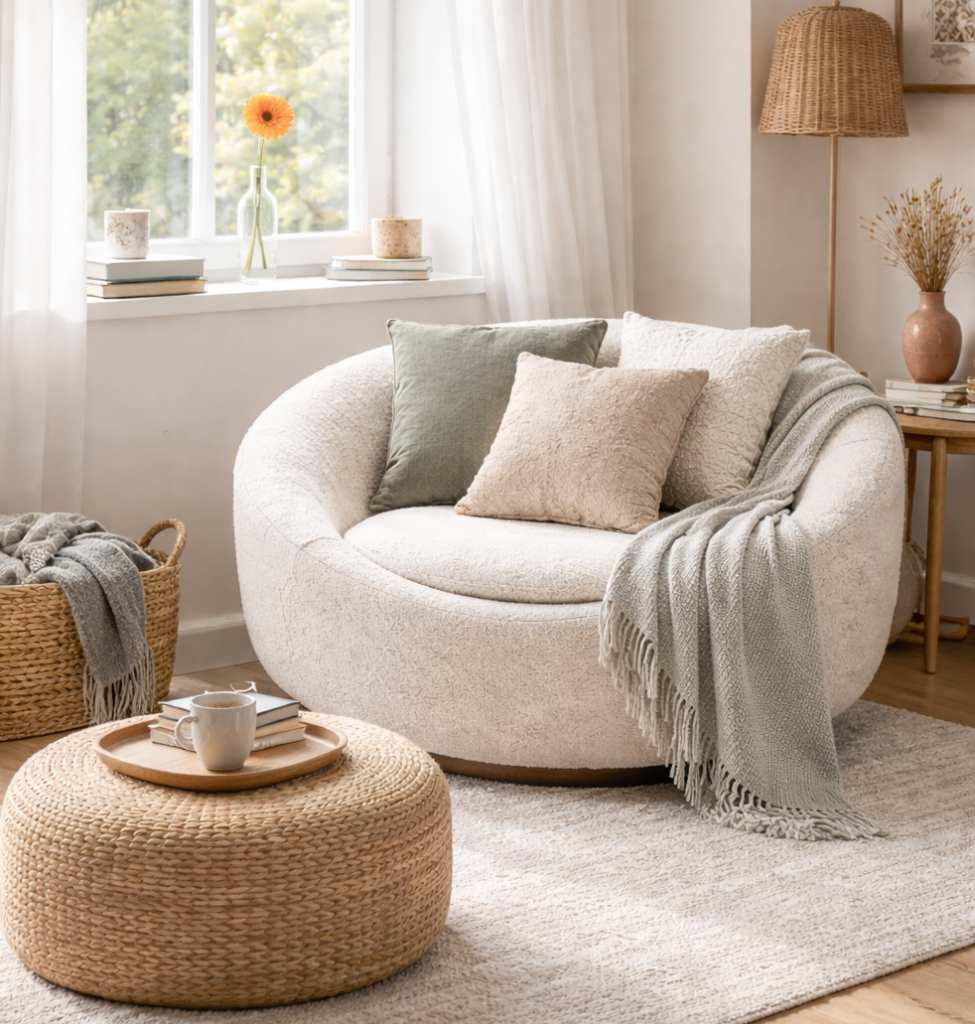
Minute 15–20: Add Texture From What You Already Own
This is where comfort lives.
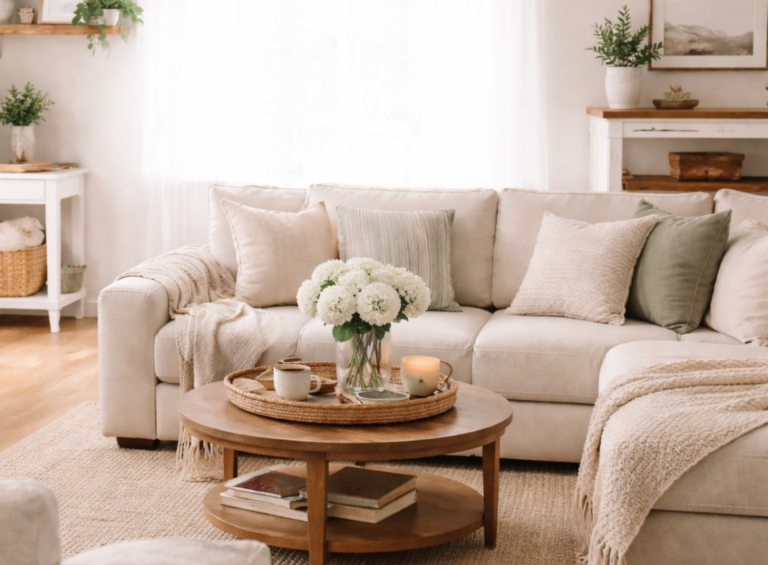
- Drape a throw casually instead of folding it stiffly
- Fluff pillows
- Swap pillows from another room for a softer mix
- Bring in a woven basket
- Add a small stack of books
Texture adds warmth without adding clutter.
Flat rooms feel cold.
Layered rooms feel lived-in.
Minute 20–25: Remove One “Hard” Element
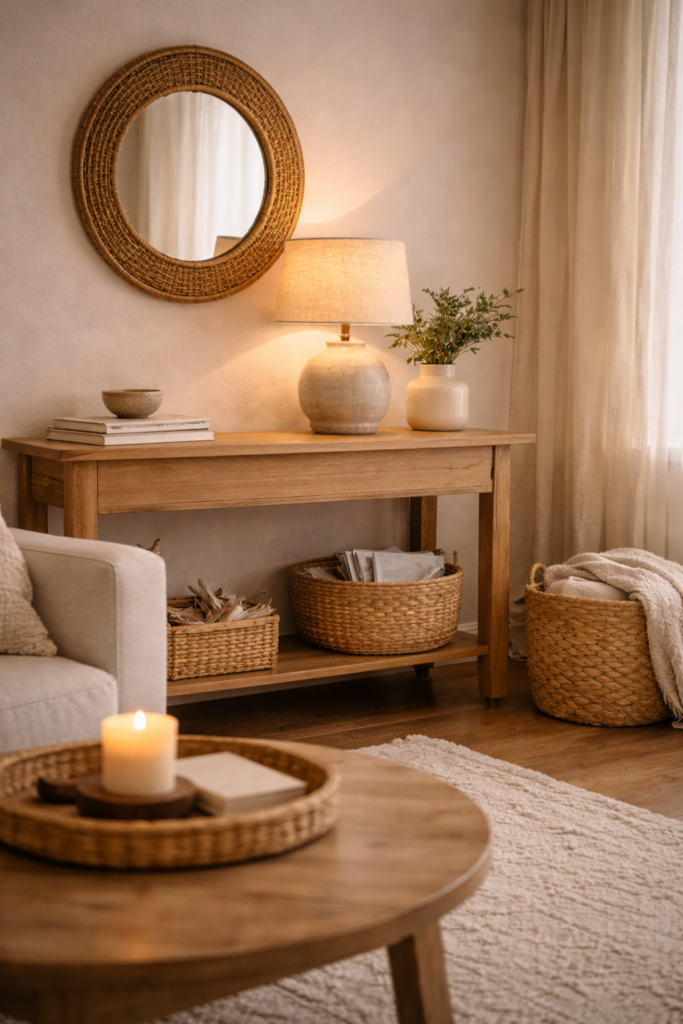
Look around.
Is there something sharp, shiny, or visually loud?
Examples:
- A glossy tray
- Too many bold patterned pillows
- Excess electronics in view
- High-contrast decor pieces
Hide or soften one of them.
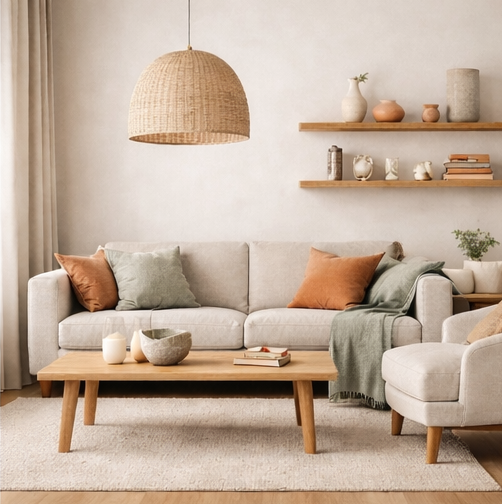
Relaxed rooms lean into matte, natural, grounded materials.
You don’t need to replace anything.
Just reduce contrast.
Minute 25–30: Create a Micro Moment
This is the quiet secret.
Choose one small area and make it feel composed:
- Chair + lamp + folded throw
- Coffee table + candle + book stack
- Sofa corner + pillow trio
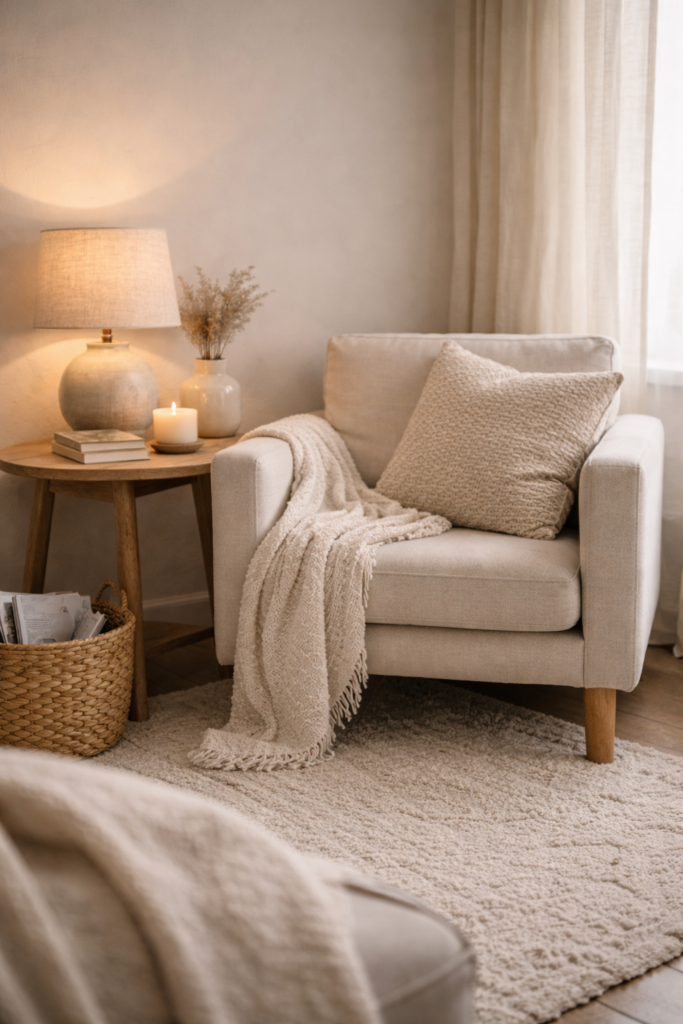
Use the Rule of Three if it helps. Vary heights slightly.
When one area feels intentional, the entire room feels elevated.
Arrangement is more powerful than acquisition.
Final Step: Set the Mood on Purpose
Pause.
Ask yourself:
How do I want this room to feel?
- Calm
- Cozy
- Light
- Minimal
Now remove anything that doesn’t support that answer.
Your living room doesn’t need to look styled for social media.
It needs to feel right to you.
Common Reset Mistakes to Avoid
- Adding more decor
- Buying something immediately
- Overthinking every adjustment
- Comparing your space to Pinterest
Relaxation is the goal. Not perfection.
Download the printable checklist below for easy use while you reset your space.
Final Thoughts
You don’t need new furniture. You don’t need a budget.
You need 30 intentional minutes.
Clear the surfaces.
Soften the light.
Shift the layout.
Layer texture.
Create one composed moment.
And suddenly, your living room feels different.
Lighter.
Quieter.
More aligned.
That’s the power of designing by mood.