Designing a Reading Nook That Feels Calm, Clear, and Intentional
Some spaces don’t feel messy… but they still feel distracting.
You sit down with a book, and your attention never fully settles.
The lighting feels too harsh.
The corner feels unfinished.
There’s just enough around you to quietly pull your focus somewhere else.
So instead of slowing down, you adjust things.
You check your phone.
You get back up.
That usually isn’t about discipline.
It’s about the feeling of the space.
A relaxed and focused reading nook isn’t about styling the perfect corner.
It’s about creating a space that feels calm enough to stay in and clear enough to breathe in.
What a Relaxed + Focused Reading Nook Actually Feels Like
This kind of space is soft without feeling sleepy.
Simple without feeling empty.
It feels:
- calm, but intentional
- comfortable, but controlled
- quiet, but still lived in
- minimal, but warm
Instead of filling the space with decor, the goal is to remove friction.
When the room asks less from you, it becomes easier to slow down.
What Usually Makes a Reading Space Feel “Off”
Most reading corners aren’t bad.
They’re just trying to do too much.
Usually they have:
- too many small decorative objects
- piles of books instead of intentional placement
- overhead lighting that feels harsh
- seating that’s either stiff or overly soft
- visual clutter that competes for attention
Even when a space looks cozy, it can still feel mentally loud.
That’s the difference between a room that photographs well and a room you actually return to.
The 5 Elements of a Calm + Focused Reading Nook
Keep this simple.
This is where most people overdesign the space and lose the feeling completely.
This website contains affiliate links. I may earn a commission at no additional cost to you if you make a purchase through these links.
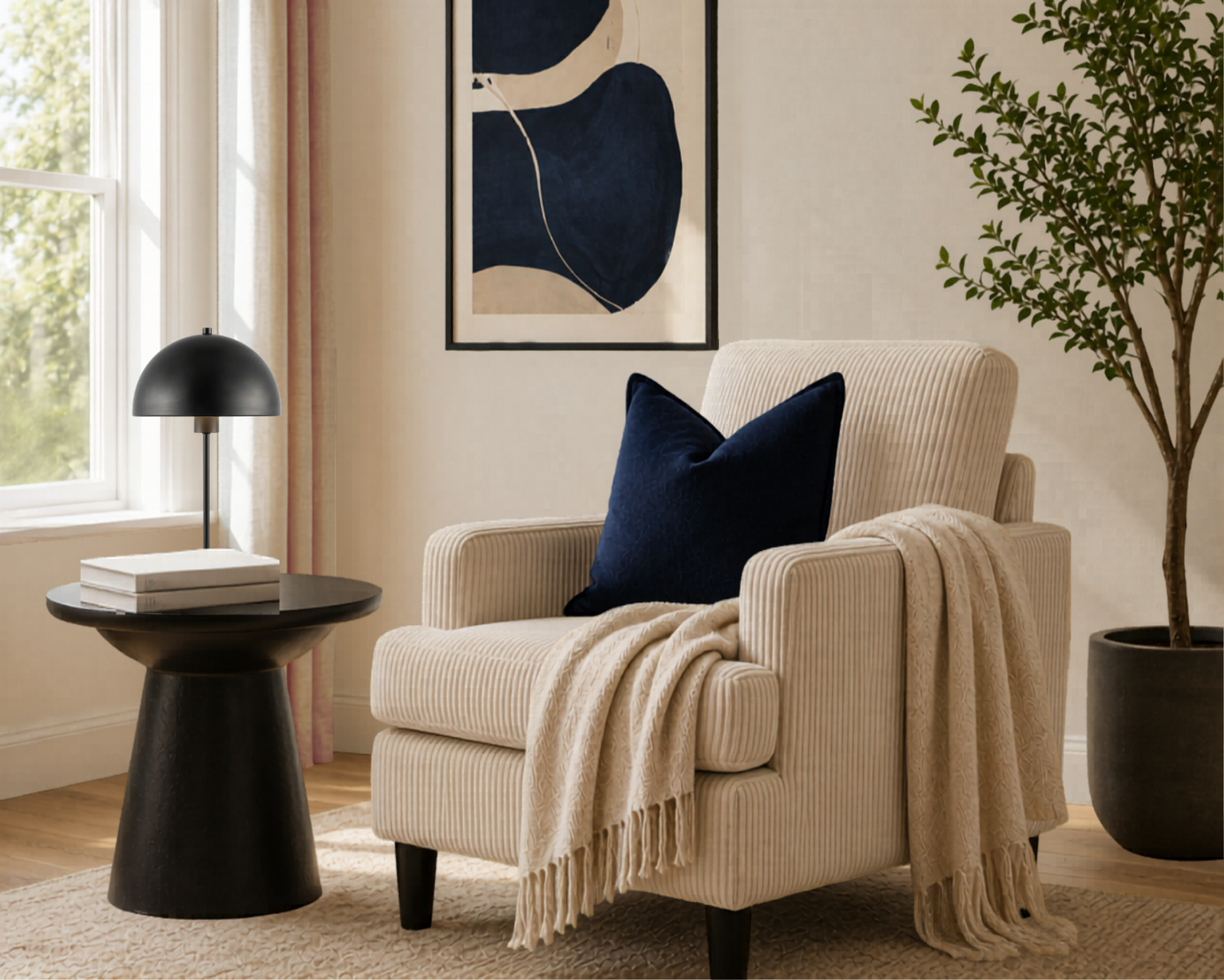
1. A Chair That Feels Grounded
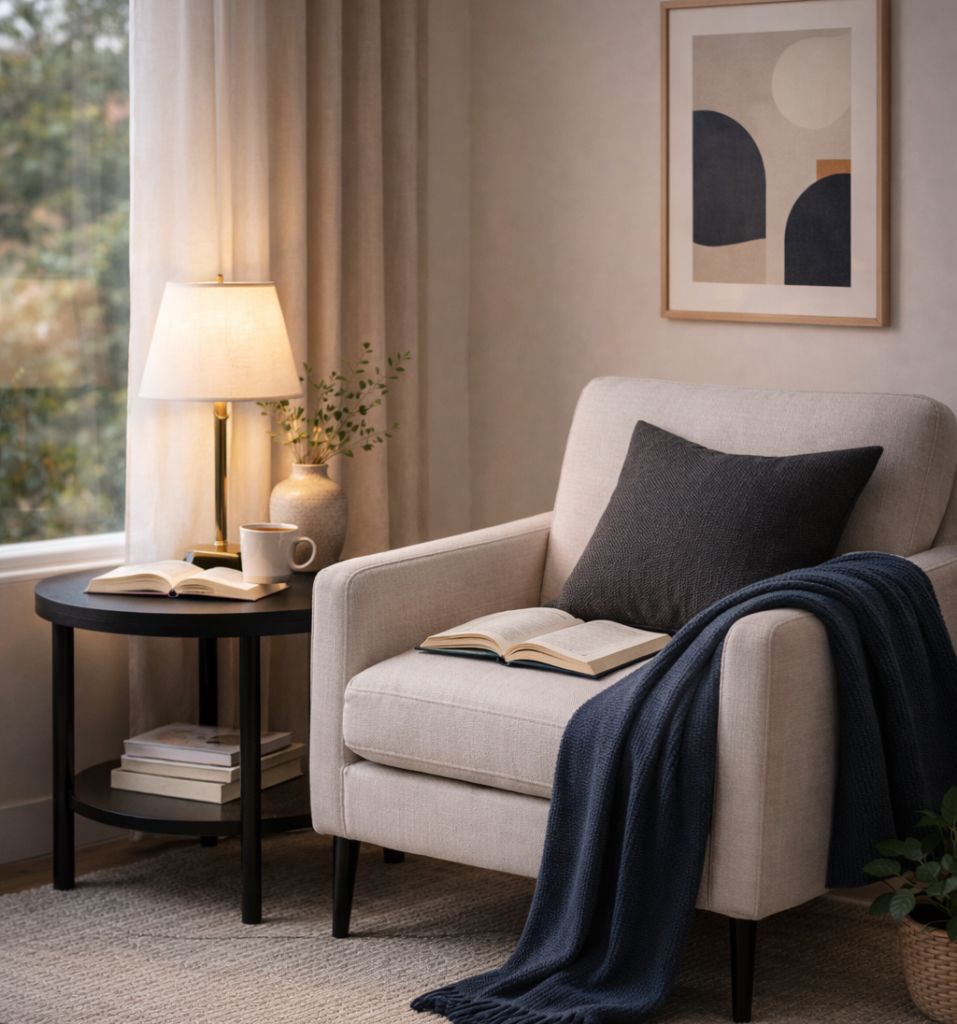
Start with one defined seat.
Look for:
- clean lines
- soft but supportive structure
- neutral fabric or controlled color
- a shape that feels contained, not oversized
A reading nook should feel like a place to settle into, not disappear into.
2. Lighting That Softens the Room
Lighting changes the feeling faster than anything else.
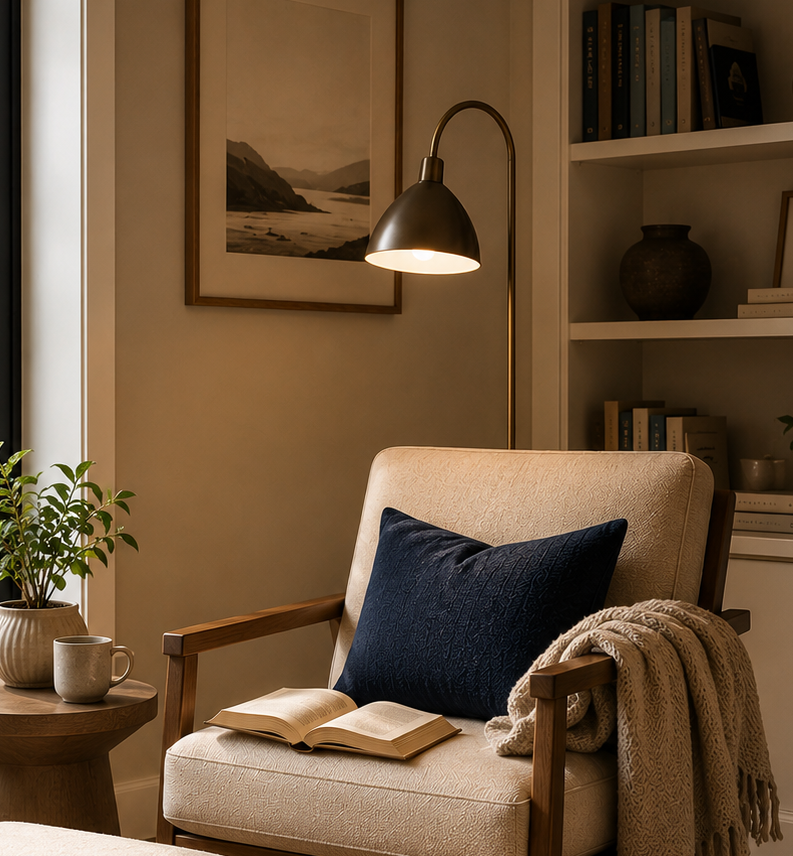
Instead of relying on overhead lights:
- use one warm lamp
- keep the glow close to the chair
- let the light stay contained to the corner
This creates separation from the rest of the room without needing walls.
Relaxed lighting softens the space.
Focused lighting keeps it intentional.
You want both.
3. One Small Surface
You don’t need a full setup.
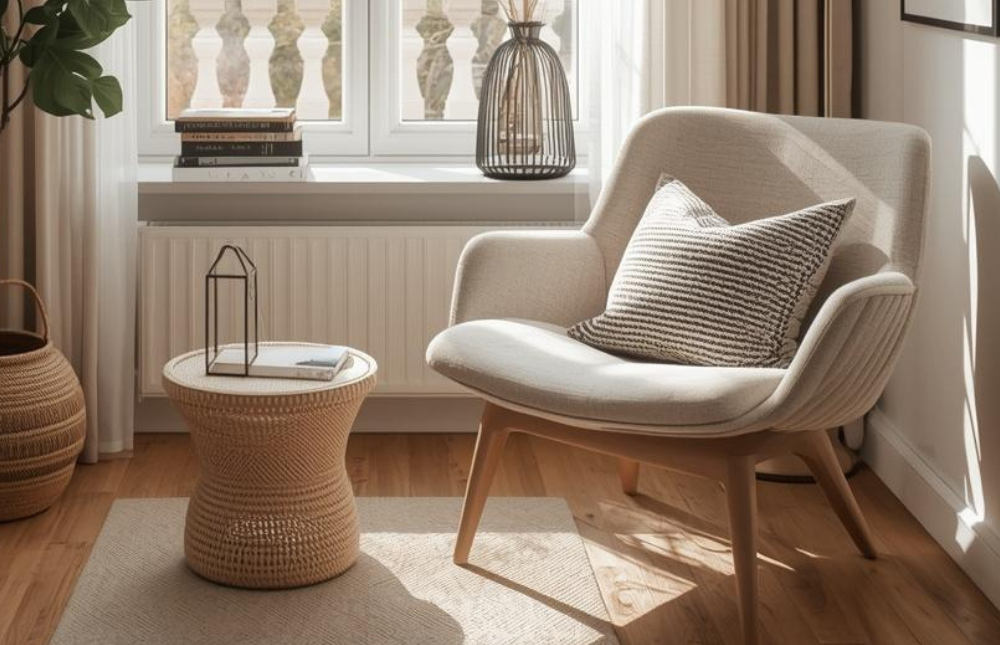
One small side table or stool is enough.
Just enough room for:
- a book
- tea or coffee
- reading glasses
That’s it.
Too many surfaces invite clutter.
The calmer the setup feels, the easier it is to return to.
4. A Controlled Color Palette
This is where the relaxed + focused balance matters most.
Start with:
- warm neutrals
- soft woods
- textured fabrics
Then add one controlled deeper accent:
- muted navy
- charcoal
- deep olive
- soft rust
The contrast helps the nook feel intentional without making it feel cold.
5. Space to Breathe
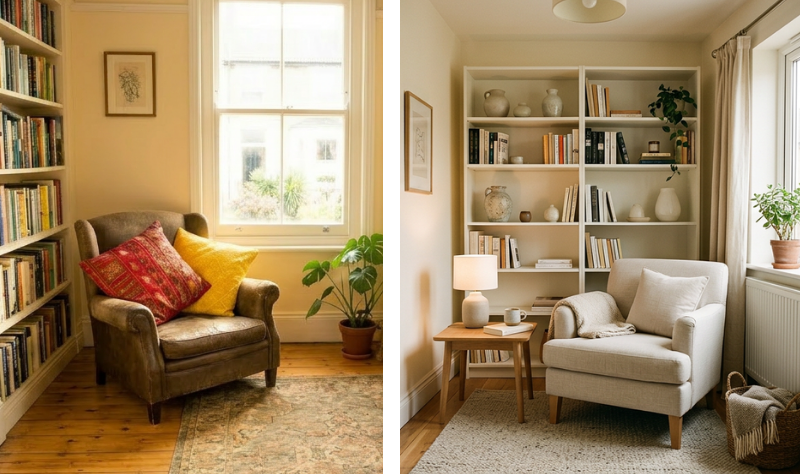
Not every corner needs to be filled.
Leave one area intentionally empty.
That empty space is what makes the nook feel calm instead of crowded.
A room doesn’t start feeling peaceful when you add more.
It starts feeling peaceful when you stop asking it to hold everything.
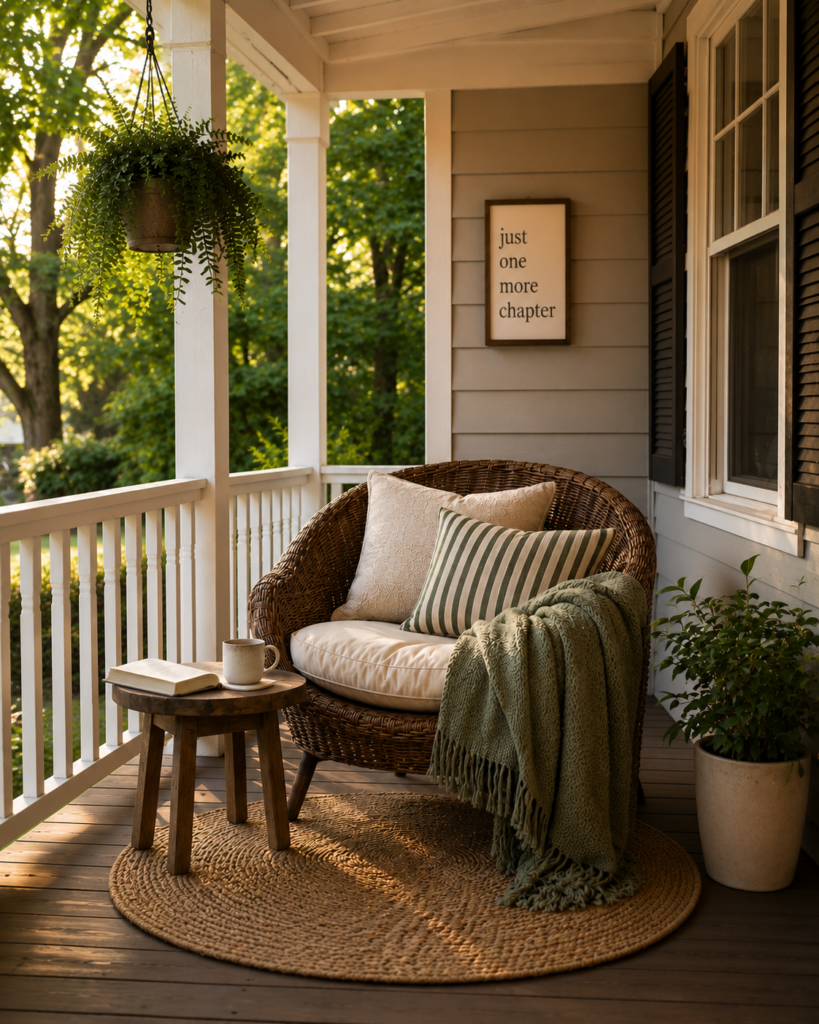
Where to Place a Reading Nook
You don’t need a perfect room.
You need a quiet pause somewhere inside your home.
Some of the best spots are:
- an unused bedroom corner
- beside a window
- the edge of a living room
- near a bookshelf
- an empty wall that currently feels unfinished
If the space already feels slightly quiet, start there.
The 15-Minute Reading Nook Reset
This is the easiest way to begin without overthinking it.
Reset the Space
☐ Choose one corner
☐ Remove everything from the area
☐ Place one chair
☐ Add one warm light source
☐ Add one small surface
☐ Select 1–3 books only
☐ Add one soft layer (throw or pillow)
☐ Leave part of the space empty on purpose
Done.
No redesign.
No perfect styling.
Just a calmer place to land.
Why This Kind of Space Matters
A reading nook isn’t really about reading.
It’s about creating one area in your home that feels slower than everything else.
A place that doesn’t demand your attention.
A place that feels clear enough to settle into.
That feeling changes more than people expect.
Final Thought
You don’t need a bigger room.
You don’t need more decor.
You need a space that feels calm enough to stay in and intentional enough to return to.
Design by mood, not by trend.