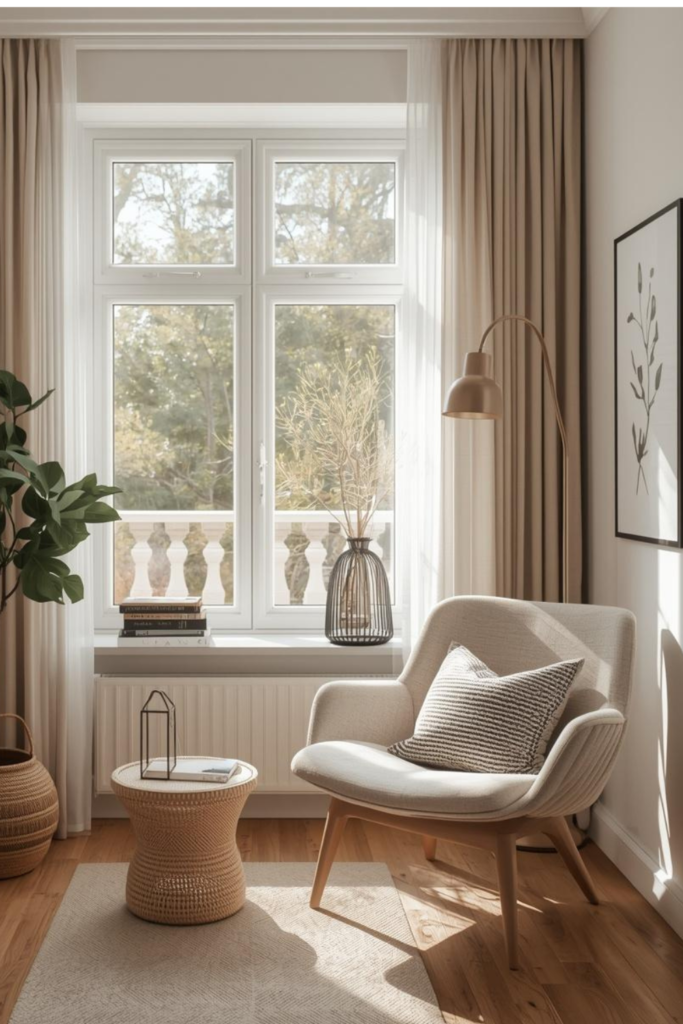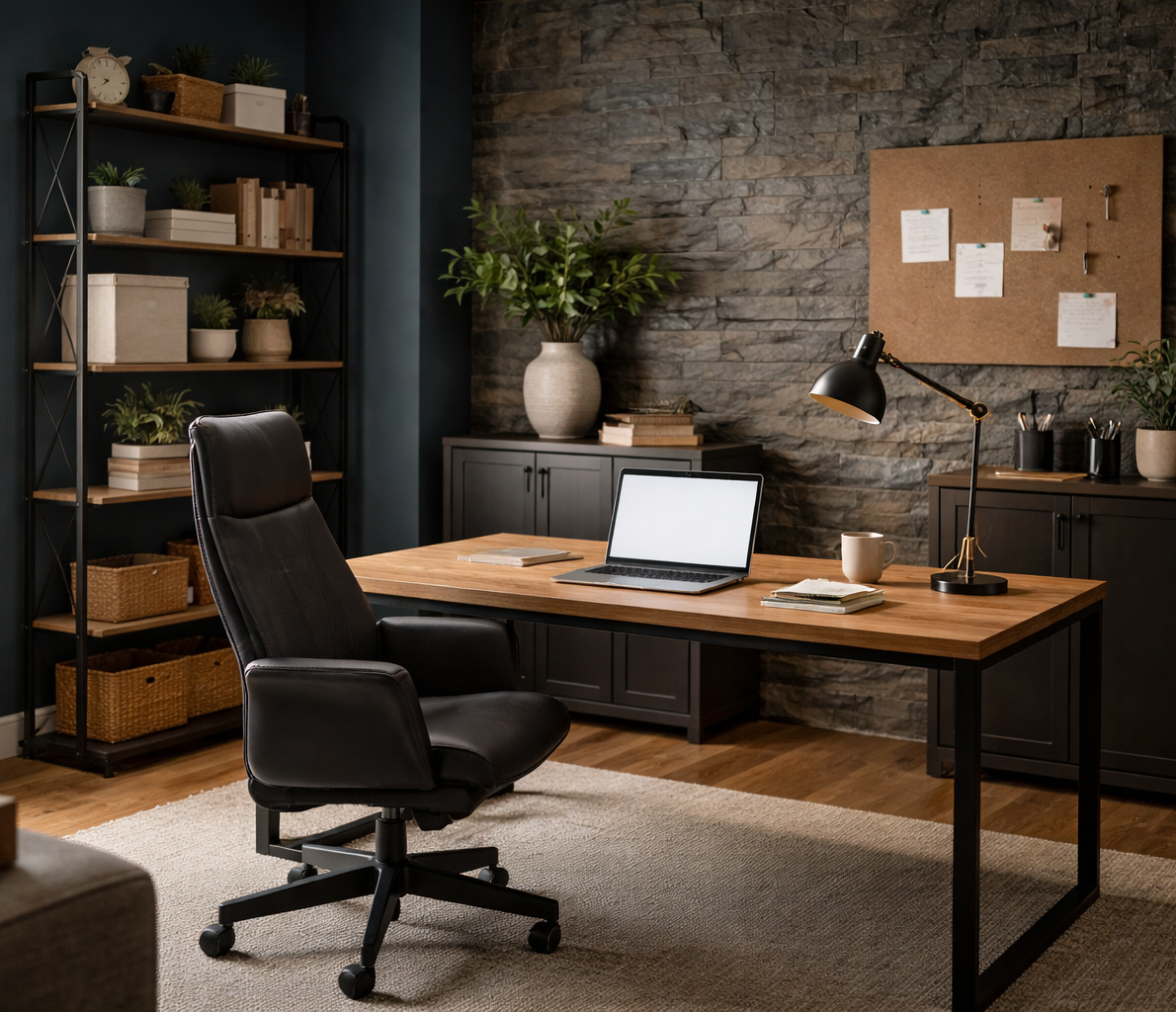
Designing a Focused Space: How to Create a Room That Helps You Get Things Done
We talk a lot about motivation.
But motivation is fragile.
Your environment? That’s powerful.
A focused space doesn’t rely on trends, loud colors, or productivity hacks. It’s designed intentionally. It removes friction. It quiets distraction. It supports clarity.
If your space feels cluttered, chaotic, or visually loud, your mind usually follows.
Let’s fix that.
What a Focused Mood Actually Feels Like
A focused room should feel:
- Grounded
- Clear
- Structured
- Intentional
- Slightly minimal but not cold
It’s not sterile. It’s not trendy. It’s not aesthetic for the sake of Instagram.
It’s functional beauty.
Step 1: Start with Visual Simplicity
Clutter is mental noise.
That doesn’t mean you need an empty white box. It means every item in the room should have a purpose.
Try this:
- Keep surfaces 70% clear
- Use closed storage when possible
- Limit decorative objects to 2–3 per zone
- Choose clean-lined furniture
A focused space is not busy. It breathes.
Step 2: Choose a Grounding Color Palette
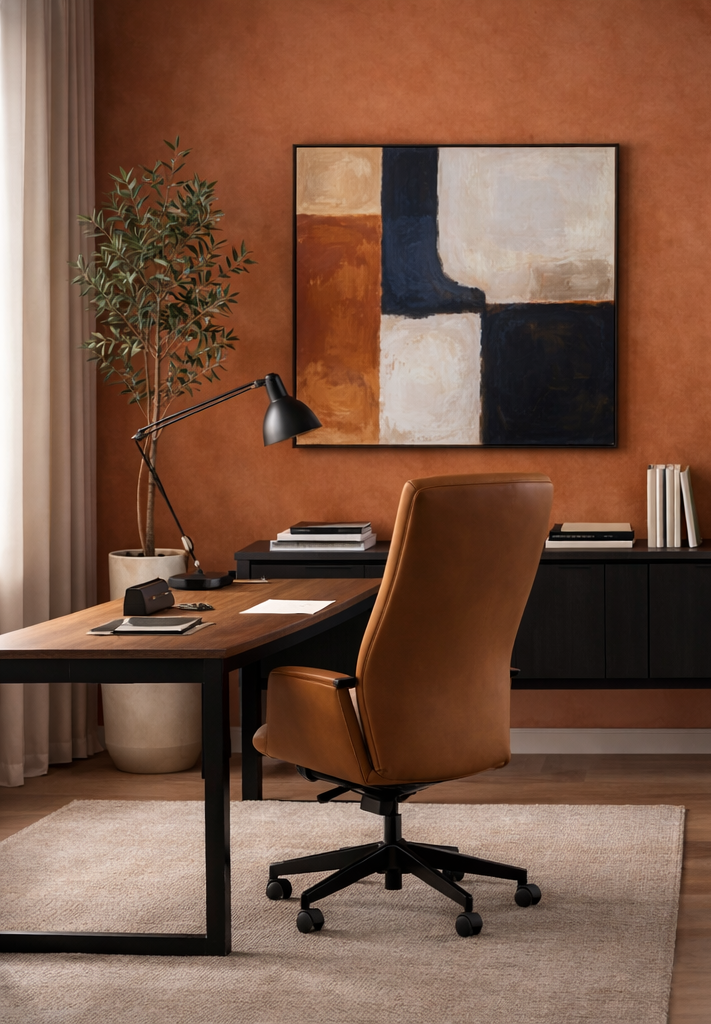
Color affects attention more than people realize.
For a focused mood, lean into:
- Deep navy
- Slate gray
- Charcoal
- Warm white
- Muted earth tones
Avoid overly bright or high-contrast patterns. Save those for energetic spaces.
If you want subtle depth, incorporate texture instead of color. Think:
- Matte finishes
- Wood grain
- Linen
- Brushed metal
Texture adds interest without distraction.
Step 3: Upgrade Your Desk Area
If this space is for work, studying, planning, or creating, your desk area matters most.
Focus-friendly upgrades:
- A high-back supportive chair
- A solid wood or matte black desk
- Minimal desk organizers
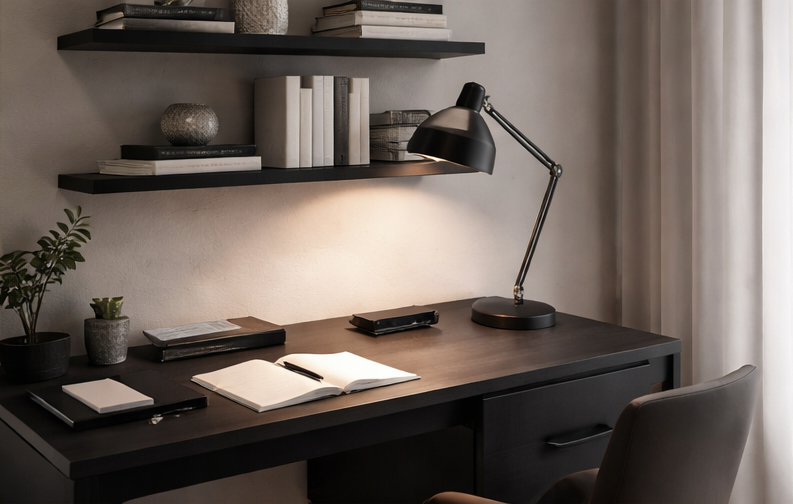
- One statement task lamp
- Clean cable management
Nothing kills focus faster than visual cord chaos.
Step 4: Use Lighting Strategically
Bad lighting makes everything harder.
For focus:
- Use directional lighting (task lamps)
- Avoid overly warm yellow light
- Add one secondary soft light source to prevent harsh contrast
Layered light creates clarity without glare.
Step 5: Add One Intentional Statement Piece
This is important.
A focused space should not feel lifeless.
Add one anchor piece that feels strong and structured. For example:
- A large minimalist wall art piece
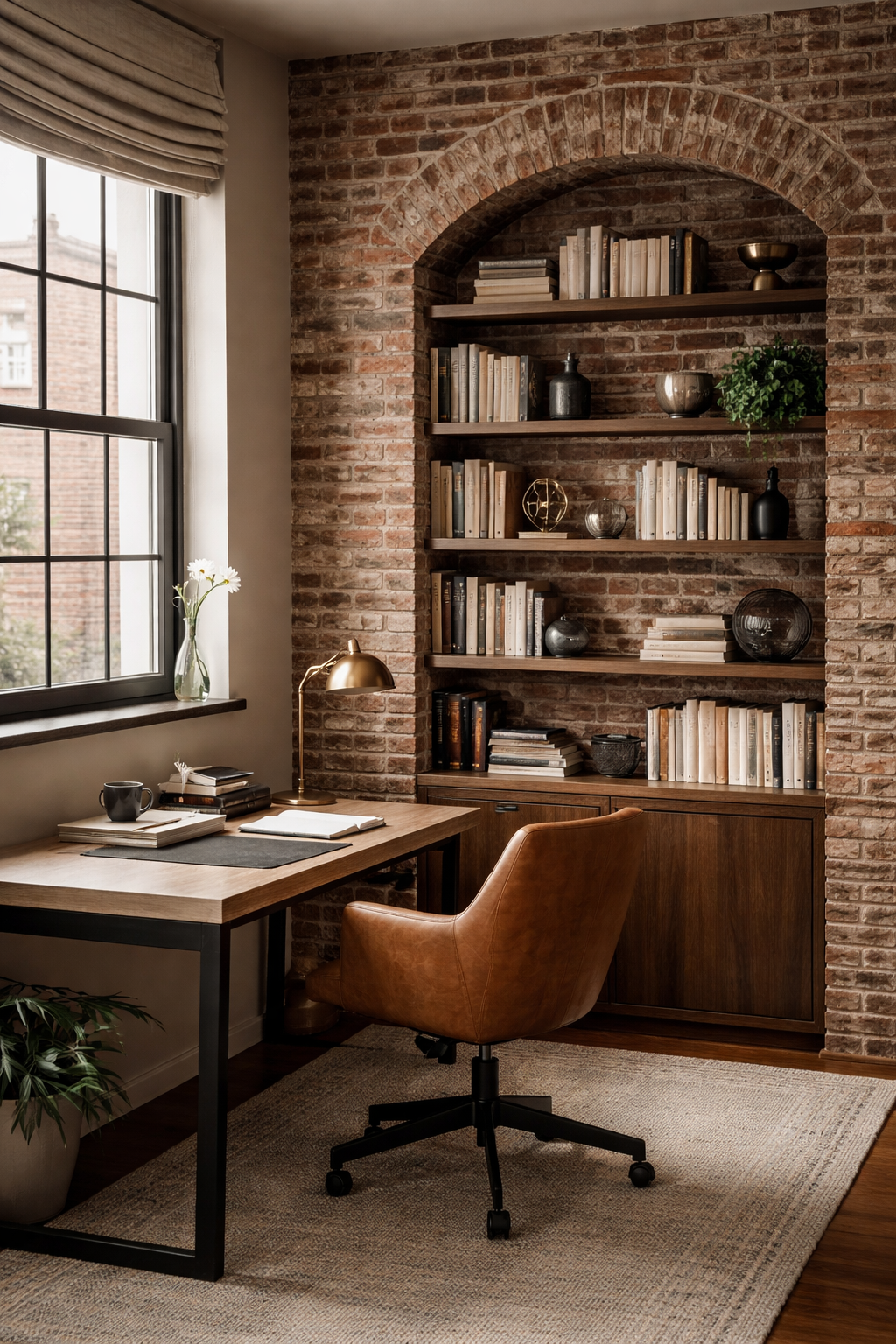
- A slate or textured accent wall
- Industrial-style shelving
- A structured plant like a snake plant or olive tree
One statement. Not five.
Step 6: Remove What Distracts You Personally
This part is underrated.
What distracts you?
- Is it open shelving?
- Is it your phone on the desk?
- Is it bright art?
- Is it visual clutter?
Design around your own tendencies.
A focused space isn’t universal. It’s personal.
Before you call it done, ask:
- Does this room feel calm but alert?
- Can I sit down and immediately know what to do?
- Is there anything visually pulling my attention away?
- Does the layout feel structured?
If the answer is yes to clarity and no to distraction, you nailed it.
Final Thought
Trends are loud.
Focus is quiet.
When your space reflects clarity, your mind follows. You don’t need more motivation. You need fewer distractions.
Design your space for the mood you want to live in.
Focused. Intentional. Ready.
Not sure where you want to start?
Take a 2 minute quiz to find your mood and follow the free mood guide and checklist.
Below are a few pieces that reflect this focused mood if you’re ready to bring it into your own space.
Affiliate Disclosure
Some links on this page may be affiliate links, which means I may earn a small commission if you buy through them. It does not cost you extra and I only share pieces that fit the mood, function, and feel of the space.
Curated Pieces for a Focused Space
Creating a focused environment isn’t about adding more. It’s about choosing intentionally. These pieces align with the structured, minimal feel described above.
Design isn’t just visual. It’s functional. These pieces support clarity, structure, and productivity.
Minimal Matte Desk
Clean lines. No visual distraction. A strong anchor for the room.
→ View the desk here
Structured High-Back Chair
Supportive and neutral, designed to keep you comfortable without adding bulk.
→ Explore the chair here
Directional Task Lamp
Focused light, reduced glare, improved clarity.
→ See the lamp here